
All services
Wound care

Wound care nursing at home in Ghana

A wound that is dressed properly every few days heals. A wound that is dressed when someone remembers, with whatever is in the house, becomes an infection, an amputation risk, or a readmission. Our nurses bring sterile technique, the right dressings and a photographic record into the home.
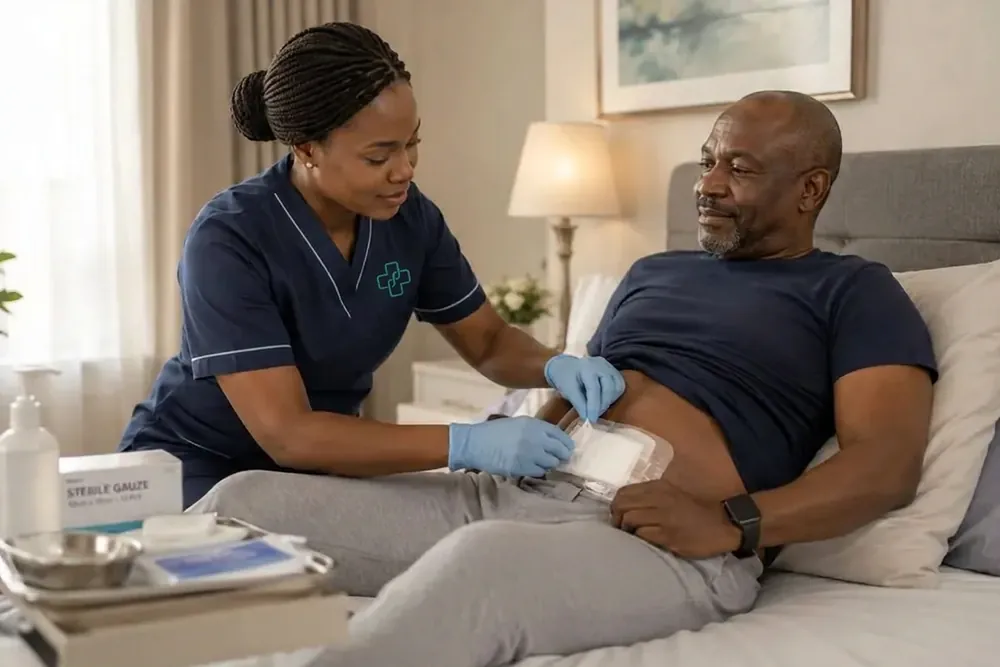
A nurse applying a sterile dressing to a patient resting in bed at home
Who it's for

Families usually call us when they see this

  • A diabetic foot ulcer or a wound that will not close
  • A surgical wound needing regular dressing after discharge
  • Pressure sores in someone who is bed-bound
  • Redness, swelling, odour or discharge around a wound
  • Dressings currently being changed by family with no training
What the nurse does

Inside the care plan

Every visit is delivered by a licensed, vetted Ghanaian nurse we employ directly, with a senior clinical lead behind them.

Assessment before dressing

Size, depth, tissue type, exudate, odour and surrounding skin assessed at each visit, so the dressing choice follows the wound rather than habit.

Sterile dressing technique

Proper hand hygiene, sterile field and single-use materials at every change, the difference between healing and cross-infection.

Diabetic and pressure wound management

Offloading, repositioning schedules, blood-sugar awareness and skin protection for the wounds most likely to end badly if managed casually.

Photographed healing progress

The same wound photographed at each visit, so improvement or deterioration is measurable rather than argued about.

Escalation when it is not healing

Signs of infection or stalled healing go to our clinical lead and to the treating doctor with the full photographic history attached.

The proof

What your family sees after every visit

Wherever you live, the record arrives the same day. Several family members in different countries can hold access to it at once.

  • Wound photographs at each visit
  • Measurements and tissue description
  • Dressing type used
  • Temperature and infection signs
  • Escalations and doctor contact
See a real visit record →
Questions

Comprehensive wound care: what families ask

Do you supply the dressings?
Yes. The dressings and sterile materials appropriate to the wound are part of the care plan, and we tell you in writing what is included before care starts.
How often will the dressing be changed?
That is set by the wound, not by a fixed schedule. Some wounds need daily attention, others every two or three days. The nurse reassesses at each visit and the plan changes as the wound does.
Can you manage a diabetic foot ulcer at home?
Yes, and it is one of the most important things we do. Alongside dressing we address offloading, footwear, blood sugar and daily inspection, and we escalate early, because delay is what costs limbs.
How will we know whether the wound is actually improving?
Because you see it. Each visit adds a dated photograph and measurement to the record, so the trend over weeks is visible to the family and to any doctor you consult.
Read all questions →

Book a home visit for comprehensive wound care

Tell us about the person and their condition. We'll assess at home, match a licensed nurse, and you'll see every visit as it happens.

  1. 1We call you backA member of our clinical team calls within one working day, at a time that suits your time zone.
  2. 2A nurse assesses at homeWe visit the person at home, agree the care plan with you, and match a licensed nurse.
  3. 3Visits begin, you see everythingEvery visit is recorded the same day, and family abroad can read it as it happens.

Enquiry about comprehensive wound care

We'll only use these details to contact you about care.