
Wound inspection and dressing
Sterile technique at every change, with the wound photographed so healing, or the first sign of infection, is documented rather than remembered.
Most surgical complications appear after discharge, in the first two weeks, at home, where nobody clinical is watching. Post-surgery nursing closes that gap: a licensed nurse who inspects the wound, controls the pain, gets the patient moving safely, and knows when a temperature is a nuisance and when it is a readmission.
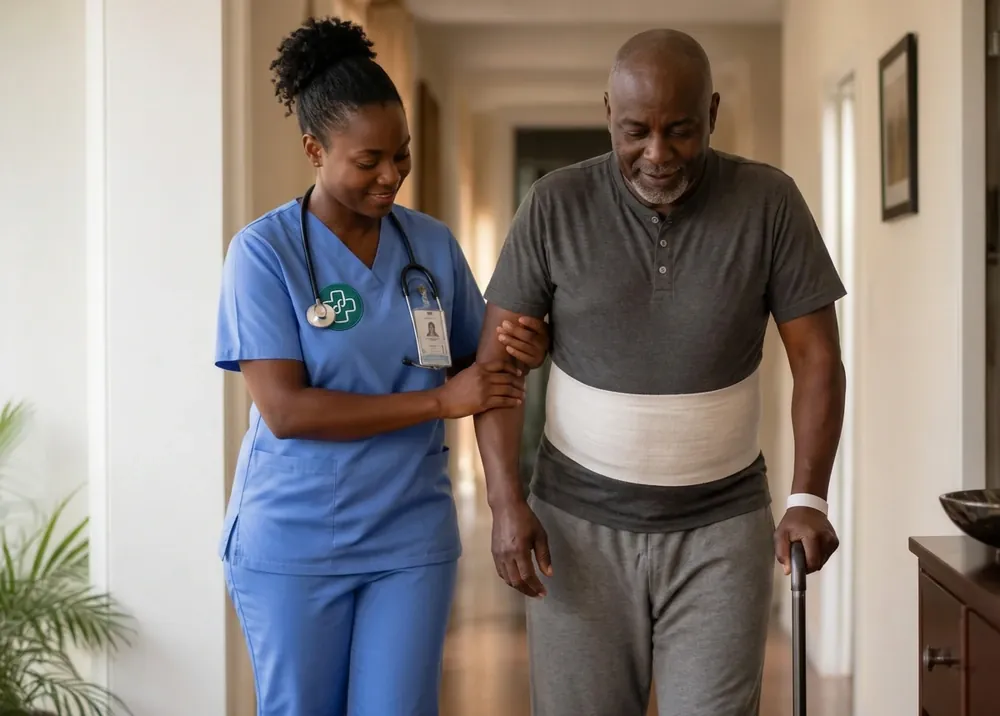
Every visit is delivered by a licensed, vetted Ghanaian nurse we employ directly, with a senior clinical lead behind them.
Sterile technique at every change, with the wound photographed so healing, or the first sign of infection, is documented rather than remembered.
Analgesia given on schedule rather than on request, antibiotics completed properly, and side effects reported early. Controlled pain is what makes early mobility possible.
Temperature, pulse, wound appearance, breathing and calf pain checked at each visit, the specific signs that precede sepsis, chest infection and deep-vein thrombosis.
Assisted walking, transfers, positioning and breathing exercises, progressed at the pace the surgical team set.
Where a surgeon or clinic is involved, we work as the continuation of their plan and contact them when the observations demand it, with the full record behind us.
Wherever you live, the record arrives the same day. Several family members in different countries can hold access to it at once.
Tell us about the person and their condition. We'll assess at home, match a licensed nurse, and you'll see every visit as it happens.