
All services
Rehabilitation

Stroke and rehabilitation nursing at home

Recovery after a stroke or a serious fracture is decided by what happens between therapy appointments. A programme done twice a week produces very little; the same programme done daily, correctly, restores function. Our nurses turn the therapist's plan into a daily reality in the patient's own home.
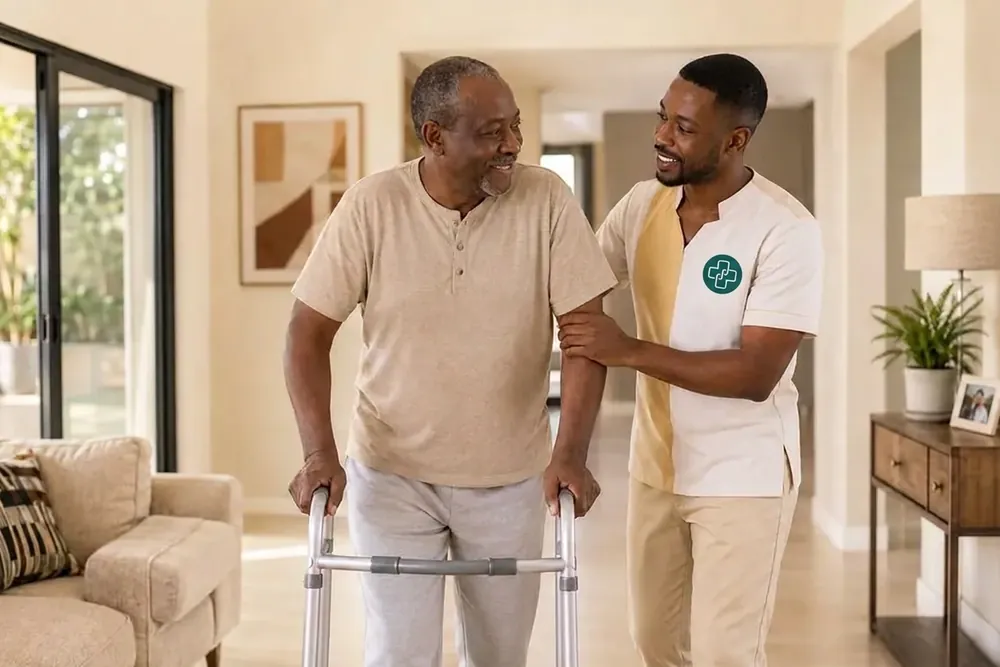
A nurse supporting an older man walking with a frame in his home hallway
Who it's for

Families usually call us when they see this

  • A stroke with weakness on one side, or difficulty swallowing or speaking
  • A hip or limb fracture with weight-bearing restrictions
  • Long hospital stays that have left the patient deconditioned
  • Repeated falls, or a fear of falling that stops movement altogether
  • A prescribed exercise programme nobody at home is confident to supervise
What the nurse does

Inside the care plan

Every visit is delivered by a licensed, vetted Ghanaian nurse we employ directly, with a senior clinical lead behind them.

The prescribed programme, done daily

We follow the physiotherapist's or doctor's plan exactly, with correct technique and honest recording of what was achieved and what was not.

Mobility, transfers and positioning

Safe bed-to-chair transfers, assisted walking, and positioning that protects a weak shoulder and prevents contractures and pressure sores.

Fall prevention in the home

Rugs, thresholds, bathroom grab points, footwear and lighting assessed and reported, because one fall can undo months of progress.

Skin, nutrition and continence

Pressure areas checked at every visit, plus support with feeding, hydration and toileting, where recovery is quietly won or lost.

Measured progress

Distance walked, transfers managed unaided, grip and independence in daily tasks are logged, so the family and the therapist can see whether the plan is working.

The proof

What your family sees after every visit

Wherever you live, the record arrives the same day. Several family members in different countries can hold access to it at once.

  • Exercises completed and tolerance
  • Distance walked and transfers achieved
  • Skin and pressure-area checks
  • Vital signs and pain
  • Photographs and weekly progress summary
See a real visit record →
Questions

Rehabilitation support: what families ask

Do you provide physiotherapy?
Our nurses deliver and supervise the rehabilitation programme prescribed by a physiotherapist or doctor and report progress back to them. Where a family has no therapist involved, we will tell you that one is needed and work alongside them once they are.
How long does home rehabilitation usually last?
It depends on the injury and the person, but meaningful stroke and fracture recovery is measured in months rather than weeks. We agree a plan, review it regularly, and step the visits down as independence returns.
My father refuses to do his exercises. What then?
That is normal, and usually about pain, fear of falling or low mood rather than stubbornness. The nurse addresses the cause, breaks the programme into achievable pieces, and records what he is actually managing so the plan can be adjusted honestly.
Can rehabilitation be combined with other nursing care?
Yes. Most rehabilitation plans sit alongside medication management, wound care or elderly care in a single monthly plan with one nurse and one record.
Read all questions →

Book a home visit for rehabilitation support

Tell us about the person and their condition. We'll assess at home, match a licensed nurse, and you'll see every visit as it happens.

  1. 1We call you backA member of our clinical team calls within one working day, at a time that suits your time zone.
  2. 2A nurse assesses at homeWe visit the person at home, agree the care plan with you, and match a licensed nurse.
  3. 3Visits begin, you see everythingEvery visit is recorded the same day, and family abroad can read it as it happens.

Enquiry about rehabilitation support

We'll only use these details to contact you about care.