
Stroke recovery at home in Ghana: a family guide to rehabilitation
A stroke changes everything in an afternoon. Recovery is measured in months, not days, and most of it happens at home. Here is what good rehabilitation support actually looks like, visit after visit.
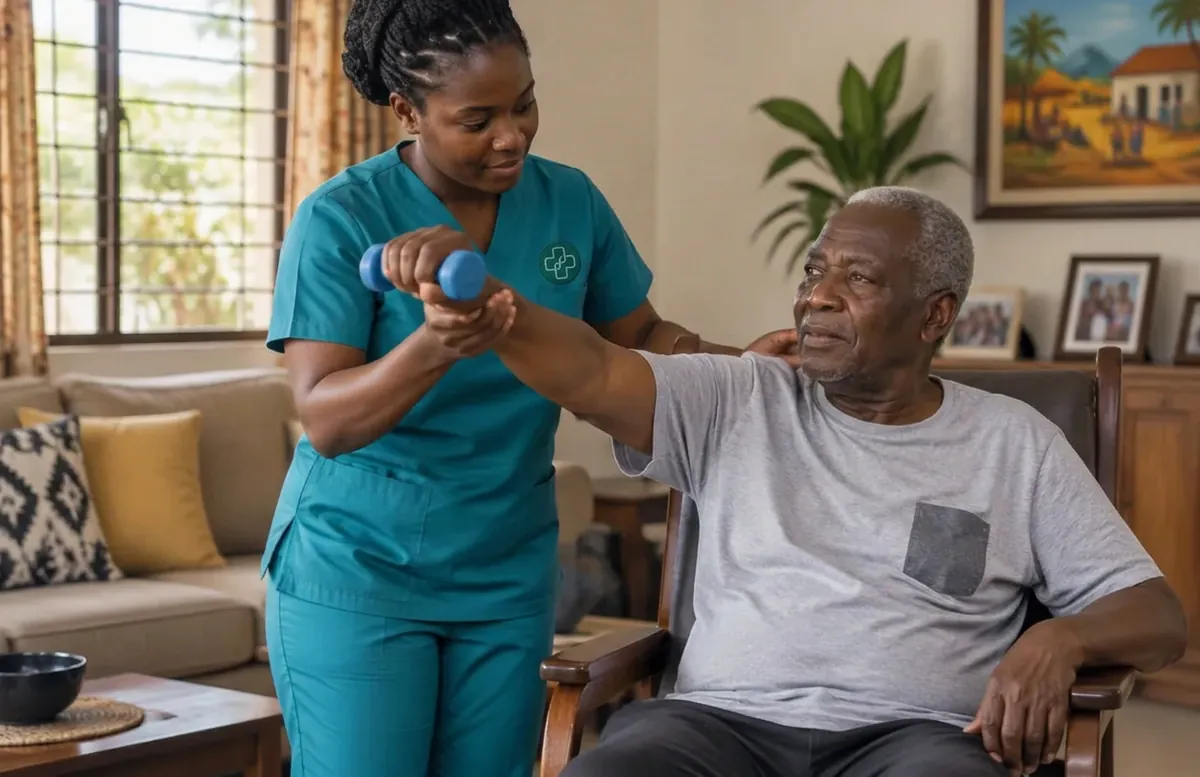
Rehabilitation is daily, not weekly
The gains after a stroke come from repetition, done correctly, every day. A physiotherapy session twice a week is not enough on its own. A nurse who is in the home can carry out the exercises the therapist prescribed, record how much was achieved, and flag when progress stalls.
Ask for the exercise plan in writing, and for it to be documented at every visit.
Watch the swallow, always
Stroke often affects swallowing, and a silent aspiration can lead to pneumonia. Meals and fluids should be approached carefully, seated upright, with the right texture. Any coughing or choking during meals is an escalation event, not a minor thing.
Record what was eaten, how it was tolerated, and any difficulty.
Medication that protects the brain
After a stroke, medication to prevent another one is critical: blood pressure control, antiplatelets, statins, sometimes anticoagulants. Missed or doubled doses undo the work of the hospital stay. A nurse manages this precisely and documents it.
Mobility, balance and falls
Most stroke survivors are at high risk of falls in the first months. Safe transfers, the right footwear, cleared floors and supervised movement are part of care. Each visit should record how mobile the person was and any near-miss.
Know the warning signs
Sudden weakness, slurred speech, facial drooping, confusion or a severe headache are emergencies. Families should know the FAST signs and the nearest hospital. A nurse who spots these early and escalates can be the difference between recovery and another stroke.
Mood is part of recovery
Depression after stroke is common and slows rehabilitation. Apathy and frustration are not character flaws. Record mood at each visit and share changes with the clinical lead, because it is treatable.
Your next step
Need advice for your own family?
Tell us about your loved one. We'll listen, answer your questions and help you decide what to do next.
Free care assessment. A written quote before you decide.