
Seven signs an elderly parent in Ghana needs professional home care nursing
Families rarely decide overnight. The need creeps up between phone calls. These are the signals that informal help has reached its limit and clinical care should begin.
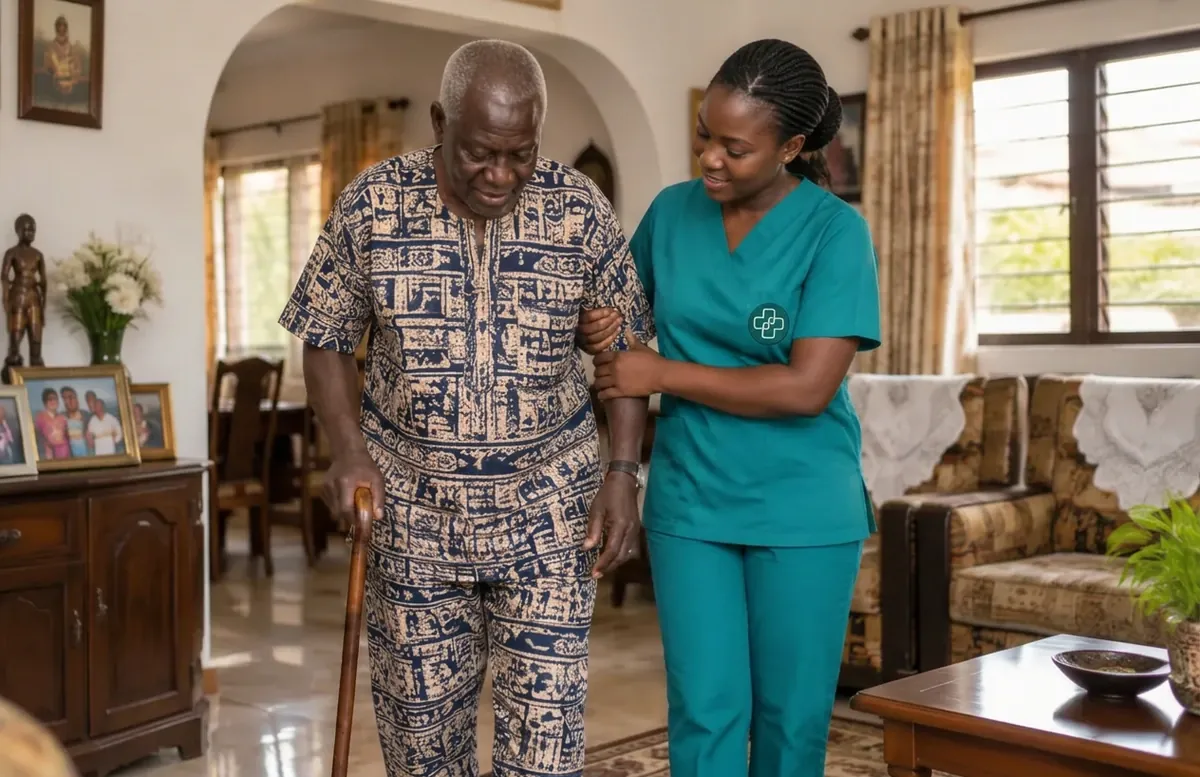
1. A fall, or a near miss they downplay
One fall dramatically raises the risk of another. If a relative mentions a fall casually, treat it as the clinical event it is: it usually points to weakness, poor vision, blood-pressure changes or medication side effects, all of which are assessable.
2. Medication that does not add up
Boxes finishing too early or too late, doses skipped on days when nobody visits, or two prescriptions from two clinics that should never be taken together. Medication management is one of the clearest reasons to bring in a nurse.
3. Weight loss nobody can explain
Clothes hanging differently on a video call is worth acting on. It can point to poor appetite, difficulty cooking, dental pain, depression or an undiagnosed condition.
4. A wound that is not closing
Diabetic ulcers, pressure sores and post-surgical wounds need proper dressing technique and regular review. This is precisely where untrained help becomes dangerous.
5. Confusion that comes and goes
Sudden confusion is often an infection, not dementia, and it is treatable when caught. Gradual, progressive change needs assessment and a care plan.
6. The house is changing
Unopened post, an unusually quiet kitchen, laundry stacking up. Environment tells you what a phone call will not.
7. The relative doing the caring is exhausted
One sibling or in-law is usually carrying everything. Respite cover is not a luxury; it is what keeps that person healthy enough to keep helping.
Your next step
Need advice for your own family?
Tell us about your loved one. We'll listen, answer your questions and help you decide what to do next.
Free care assessment. A written quote before you decide.