
Recovering at home after surgery in Ghana: what good care looks like
Discharge is not recovery. The weeks after an operation decide whether someone heals cleanly or ends up readmitted. Here is what competent home care should cover.
Wound care done properly
Sterile technique, the right dressing for the wound type, and a documented look at the site at every visit. Redness, heat, swelling, odour and discharge should each be recorded, not just noticed.
Pain that is actually controlled
Uncontrolled pain keeps people in bed, and time in bed causes chest infections and clots. Pain should be scored at every visit and the pattern reported back to the surgeon.
Getting moving on schedule
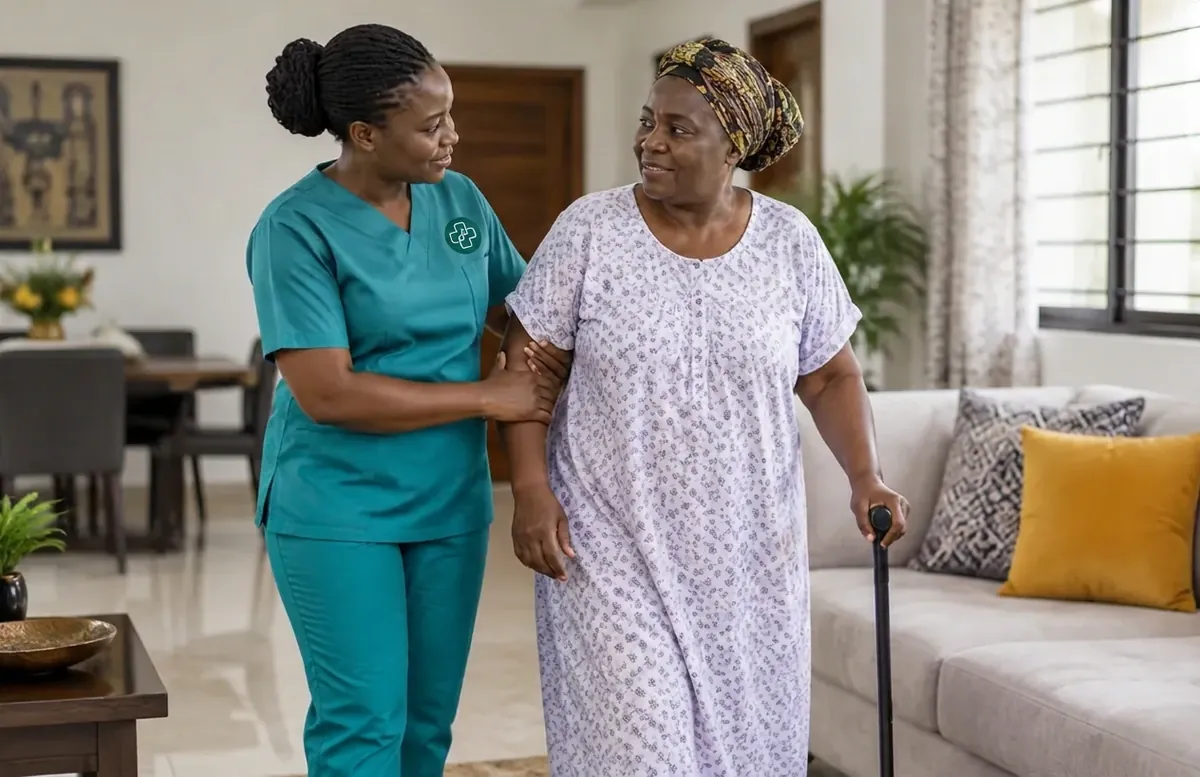
Most surgical teams want early, gradual mobilisation. A nurse who supports safe movement, and records how far the patient got, turns that instruction into something real.
Knowing what needs a doctor today
Fever, a wound that opens, calf pain or swelling, breathlessness, or a sudden change in alertness are escalation events, not wait-and-see events. Families should be told these in plain language before discharge.
A record the surgeon can read
When the follow-up appointment comes, a timestamped record of temperature, wound condition and mobility is far more useful than trying to remember three weeks of detail.
Your next step
Need advice for your own family?
Tell us about your loved one. We'll listen, answer your questions and help you decide what to do next.
Free care assessment. A written quote before you decide.